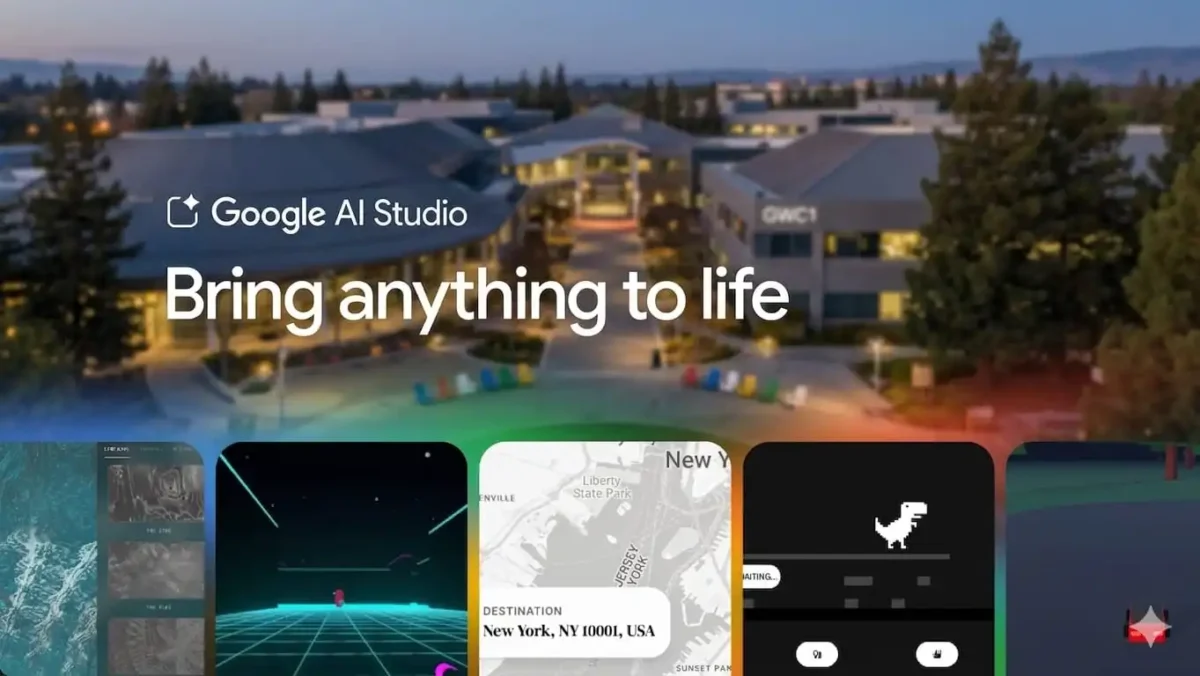
Google’s New AI Studio Update Lets You Build Full Apps From Just Prompts
Building apps usually takes time, technical skills, and multiple tools. But Google is trying to change that. With its latest update, Google has introduced a completely upgraded “vibe coding” experience inside Google AI Studio, designed to turn simple prompts into fully functional applications.
At the center of this update is a new AI coding agent called Antigravity, which can now build production-ready apps, not just basic prototypes. The goal is clear: reduce the gap between idea and execution.
From Idea to Real App Without Leaving the Browser
The biggest shift in this update is that developers can now build complete applications directly inside AI Studio. Instead of writing code line by line, users can describe what they want, and the AI handles the rest.
This includes creating interactive apps, adding features, and even setting up backend systems. The experience is designed to feel seamless, where one prompt can lead to a working product.
Google says this system has already been used internally to build hundreds of thousands of apps, showing how quickly development workflows are evolving.
Antigravity Agent Understands Your Entire Project
Unlike earlier AI coding tools that worked step by step, the Antigravity agent now understands the entire project structure. It keeps track of your prompts, code changes, and app logic over time.
This allows it to:
- Make smarter edits across multiple files
- Handle complex instructions
- Improve apps in fewer steps
- In simple terms, you don’t have to explain everything repeatedly. The AI remembers and builds on your work.
Built-In Backend With Firebase Integration
One of the most important upgrades is backend support. The system can now automatically detect when your app needs features like a database or user login.
- With your approval, it connects directly to Firebase, setting up:
- Cloud Firestore for data storage
- Firebase Authentication for secure login
- This removes a major barrier for developers, especially beginners who struggle with backend setup.
- Build Multiplayer Apps and Real-Time Experiences
- The update also enables real-time features. Developers can now create:
- Multiplayer games
- Collaborative tools
- Shared online experiences
All of this can be generated from prompts, making it easier to experiment with ideas that previously required advanced coding skills.
Support for Modern Web Frameworks Like Next.js
Google AI Studio now supports modern frameworks like Next.js, along with React and Angular. This means developers can build apps that are not only functional but also aligned with current web standards.
The AI agent can even install external libraries automatically. For example, if your app needs animations or UI components, it can add tools like Framer Motion or Shadcn without manual setup.
Connect Your Apps to Real-World Services
Another major improvement is the ability to connect apps with external services. Developers can bring their own API keys and integrate features like:
- Payment systems
- Maps
- Third-party databases
To keep things secure, Google has introduced a built-in Secrets Manager that safely stores sensitive credentials.
Work Across Devices Without Losing Progress
The new system also supports session continuity. You can close your browser and return later without losing progress. Your project state, code, and setup are saved automatically.
This makes the experience more practical for real-world development, where projects are built over multiple sessions.
What This Update Really Means
This update shows how AI is changing software development at a fundamental level. Tools like Google AI Studio are moving from helping developers write code to building entire applications with minimal input.
The focus is shifting from coding skills to idea clarity. If you can clearly describe what you want, AI can handle much of the execution.
For beginners, this lowers the entry barrier. For experienced developers, it speeds up workflows and reduces repetitive tasks.
The bigger picture is clear. AI is not just assisting developers anymore. It is becoming a core part of how software is created.