AI image generation has become a popular way for users to create festival-themed visuals using their own photos. During religious occasions like Maha Shivratri, this trend often shifts toward devotional portraits inspired by Lord Shiva, temple environments, and spiritual symbolism. This guide explains how Maha Shivratri AI photo prompts work, which tools are commonly used, and how boys can create Shiva-inspired devotional portraits using their own photos.
What Is Maha Shivratri
Maha Shivratri, meaning “The Great Night of Shiva,” is a major Hindu festival dedicated to Lord Shiva. It is celebrated annually, usually between February and March, based on the lunar calendar.
Traditionally, the festival is associated with:
- The divine marriage of Lord Shiva and Goddess Parvati
- Shiva’s cosmic dance, known as the Tandava
- Spiritual practices such as fasting, meditation, and night-long prayers
What Is a Maha Shivratri AI Photo Prompt
A Maha Shivratri AI photo prompt is a written instruction used with AI image-generation tools to create devotional images inspired by Lord Shiva, temple settings, and spiritual elements.
These prompts guide the AI on what the final image should look like, including:
Maha Shivratri Devotional AI Photo Prompts for Boys
Below are devotional-style prompts designed to create Shiva-inspired portraits.
Google Gemini Maha Shivratri AI Photo Editing Prompts For Boy
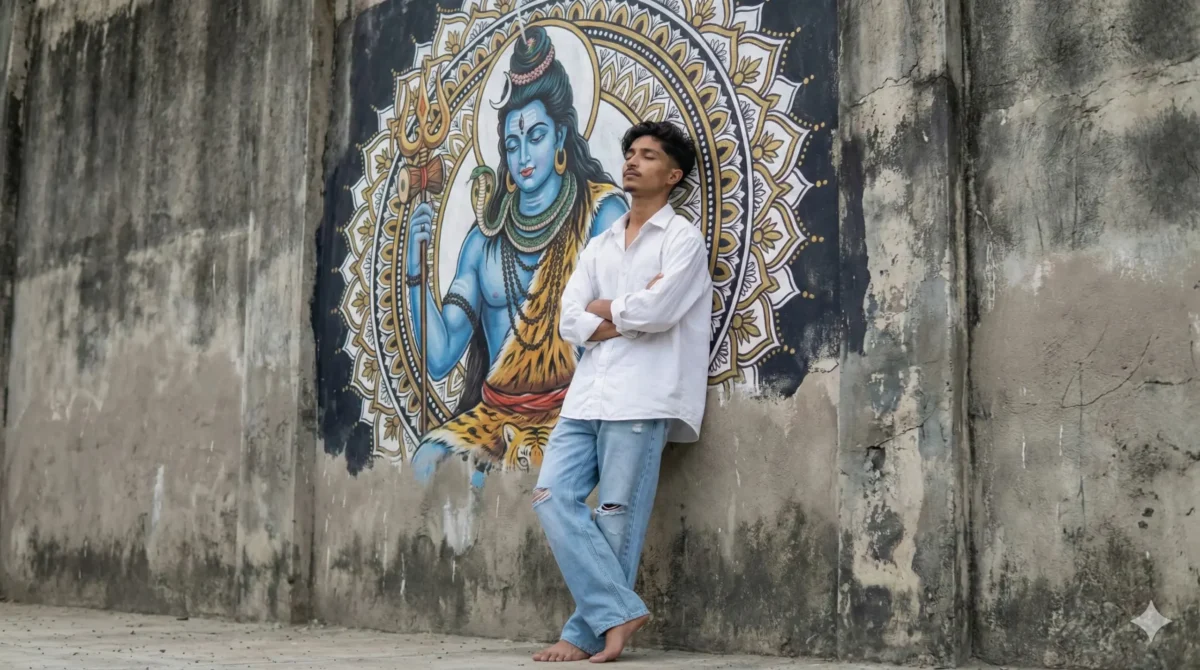
Prompt: Ultra-realistic cinematic 8K photograph, absolute face lock using the uploaded reference image as the only identity source. The face must remain exactly unchanged: identical bone structure, facial proportions, asymmetry, skin texture, pores, age, hairline, beard pattern if any, and natural expression. No beautification, no smoothing, no symmetry correction, no AI reinterpretation.
Full-body wide-angle realistic photograph of a stylish young man leaning calmly against a textured urban wall. Eyes closed, arms crossed, one leg crossed over the other, peaceful and grounded body language. Natural, unposed stance.
Wardrobe: loose oversized white button-down aesthetic shirt with rolled sleeves, light blue wide-leg jeans with ripped knees, barefoot. Minimal accessories: thin silver necklace only. Hair is volumized, messy dark wavy hair with a clean taper fade on the sides. Clothing fabrics must show real creases, weight, and daylight texture.
Environment: behind him, a massive hyper-detailed street-art mural of Lord Shiva, painted realistically as urban graffiti. Shiva has blue skin, multiple arms, holding a trishula (trident) and a damru (drum), a cobra wrapped around his neck, tiger-skin loincloth. Shiva’s face is oriented as if watching over the man. The mural background forms an intricate circular mandala in white, gold, and black, sharply detailed with visible wall grain, paint strokes, and weathering.
Lighting: natural daylight, soft but directional, realistic shadows, subtle highlights on skin, fabric, and wall texture. Cinematic color grading with restrained contrast, deep blues and neutrals, no oversaturation. True photographic depth, real lens perspective, natural dynamic range.
Camera: wide-angle lens, eye-level, full-body framing, cinematic realism, shallow-to-moderate depth of field, background mural fully legible without distortion. High dynamic range, ultra-sharp focus, no motion blur.
Style constraints: photorealistic, real-world street photography aesthetic, cinematic composition, no fantasy glow, no illustration look, no painterly artifacts, no AI plastic skin.
Aspect ratio: 3:4.
Final Take
Maha Shivratri represents devotion, discipline, and spiritual awakening. AI photo prompts are becoming a new way for users to express that devotion through personalized visuals. While there are no official Maha Shivratri AI tools, generative AI platforms make it possible to create respectful, Shiva-inspired portraits using simple text prompts and personal photos. As AI creativity continues to grow, festival-themed devotional portraits are likely to remain popular across social media.