China’s space travel in 2025 didn’t try to impress anyone. There were no loud announcements, no dramatic moments to grab headlines. Instead, the year moved forward quietly with a sense of calm confidence. Things went according to plan. Missions were launched, crews worked, problems were dealt with, and life continued in space. That steady rhythm is what truly defines China Space Program 2025.
The Tiangong Space Station remains a hub of activity throughout the year. The astronauts arrived and departed at scheduled times. They lived and worked in orbit for long periods of time, carrying out experiments and daily tasks just as researchers do on Earth. They studied how the human body reacts to long periods of time in space, tested materials in microgravity and kept a close eye on our planet from above. These missions were not meant to show that China could survive in space. That phase is already over. Now the focus is on making things better every time.
A moment during China Space Program 2025 showed this clearly. Engineers noticed a technical problem during the crewed mission. Even small problems matter in space. What stood out was how calmly the situation was handled. Backup plans were already in place. Decisions were taken step by step. Astronaut safety came first, as it should. The crew returned safely, not by accident, but because the system worked as it was supposed to. This type of reaction usually comes only after years of experience.
China wasn’t just paying attention to Earth’s orbit. China Space Program 2025 also took a serious step into deep space with the Tianwen-2 mission. Its mission is to study a near-Earth asteroid and return samples to Earth. This is not an easy task. Asteroids are small, fast-moving objects that have almost no gravity. Reaching one, landing on it, and collecting materials requires extreme precision and patience. Tianwen-2 is a mission that will take time, but it shows growing confidence in tackling complex space challenges.
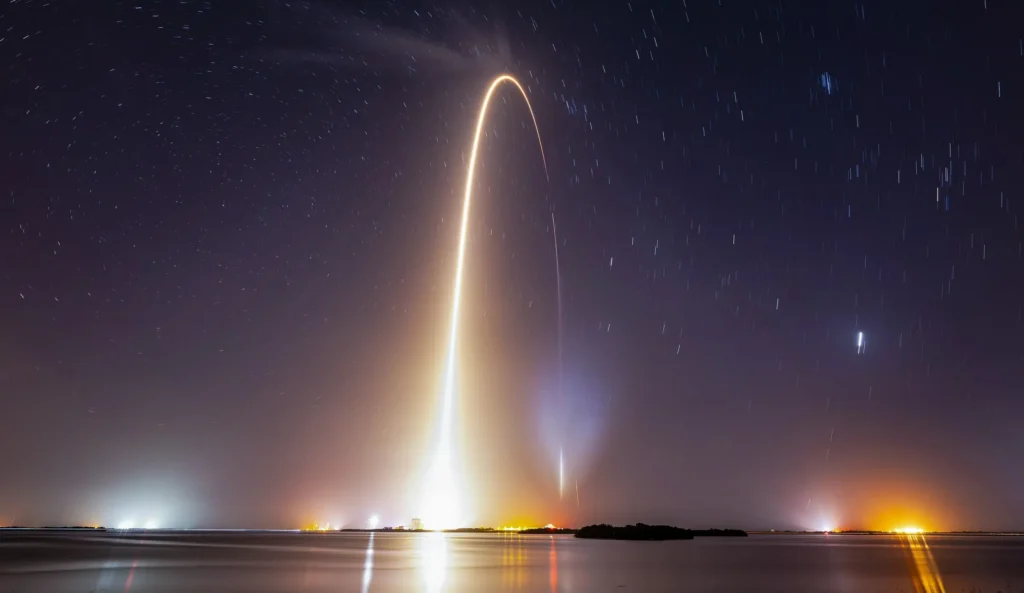
Another important sign of progress was the steady number of launches throughout the year. During the China Space Program 2025, China launched satellites, crewed spacecraft and research missions without any fanfare. These launches were not about breaking records. He showed that the entire system from manufacturing to launch and tracking is running smoothly. Space flight is gradually becoming routine, and it is often the strongest indicator of long-term success.
All these tasks connect to a bigger goal. China plans to send astronauts to the Moon around 2030. China Space Program 2025 was not just about reaching the Moon. It was about preparation. Space stations help astronauts adapt to long missions. Deep space probes test navigation and communications away from Earth. Repeated launches improve the rocket through actual experience. Each mission adds knowledge that cannot be learned on paper.
What makes China Space Program 2025 different is its attitude. there is no rush. No obvious pressure to compete for attention. Just move at a steady pace. Space exploration favors patience, careful planning and long-term thinking. China appears comfortable moving forward at its own pace, knowing that slow progress done right goes a long way.
Scipuz Take
China Space Program 2025 shows that China has entered a new phase. He’s no longer trying to prove that he belongs in space. It’s building the habits, systems, and confidence needed to stay there. Sometimes the most important progress is the one that happens quietly, without applause.